Cathedral Cove from Auckland: The Access Check, the Tide That Plans the Day, and the Spade You Rent
Two and a half hours each way to the Coromandel — the longest day this site recommends from Auckland. Check DOC’s access status before you commit, and build the whole day around the tide.
The short version
- The status check per the alarm is the page’s first instruction: Cathedral Cove’s walking track has closed and reopened following storm damage in recent years, and the current access position — track, beach, and any managed detours — lives at doc.govt.nz before any plan firms.
- The honest-long math: two and a half hours each way from Auckland on the Coromandel’s winding roads makes this the longest day this network recommends from the city — worth it exactly once per trip, per the alarm, and better as an overnight for anyone with the calendar room.
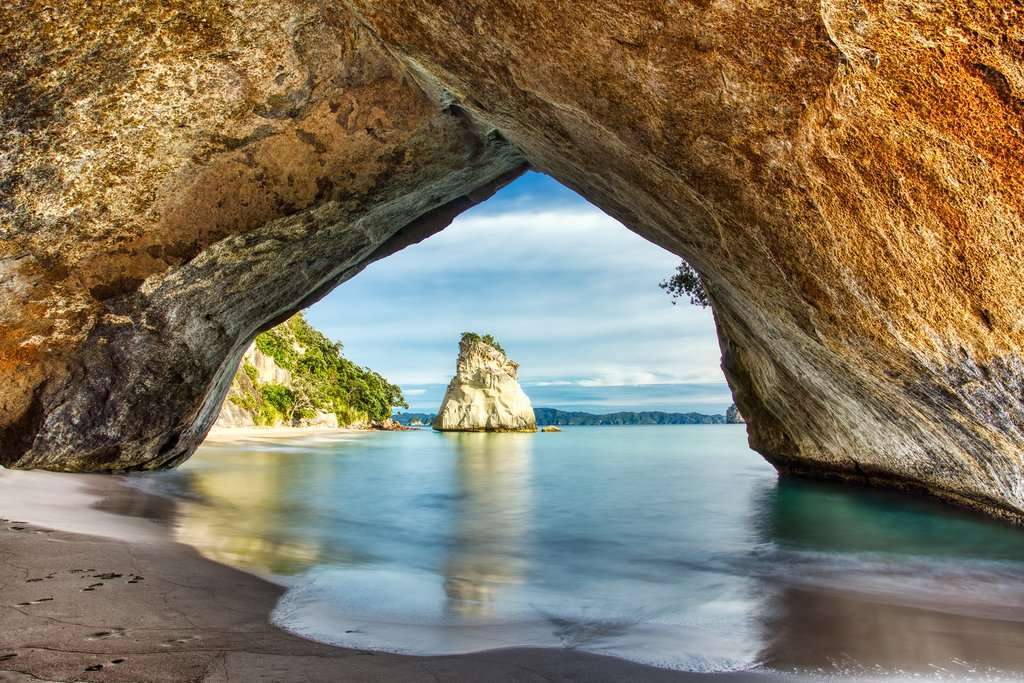
- The cove itself is the peninsula’s icon: the great sea-carved archway linking two white-sand beaches inside the Te Whanganui-A-Hei Marine Reserve — the Narnia film location credential worn lightly, the early-morning light worn seriously.
- The water-and-paddle fallback per the alarm: water taxis and guided kayak tours run from Hahei Beach to the cove on their own schedules, carrying the days the track doesn’t and adding the sea-arch approach the walkers never get.
- Hot Water Beach — ten minutes from Hahei — runs the day’s second act: hot springs percolate through the sand, and a rented spade plus the window within roughly two hours of low tide produces your own dug spa at the surf line; outside the window there is only ordinary beach.
- Summer logistics run managed: Hahei’s park-and-ride and shuttle system handles peak-season access when the village lots close to day visitors, and midweek visits per the standing rule dodge the worst of it.

Getting there
The tide table plans the day backward per the alarm: fix low tide at Hot Water Beach, place the dig inside its two-hour window, and let Cathedral Cove take whichever half of the day remains — mornings for the light and the pre-boat quiet when the track cooperates. The access check decides the cove’s mode: walk from the Hahei end when open, water taxi or kayak when not, and the boat version merits consideration even on open-track days for the arch-from-the-sea approach. Fuel, water, and patience cover the Coromandel’s roads; the drive’s coastal stretches justify themselves.
The day
Cove first on most tide tables: the walk (when open) rolls headland-and-gully to the descent, and the arch arrives as advertised — the cathedral vault between beaches, the light shafting through mid-morning, Gemstone and Stingray bays as the track’s side chapels. The marine reserve keeps the snorkeling worthwhile for those who carry gear. The boat version trades the walk for the water angle and lands you on the same sand. Then the tide window: Hot Water Beach’s spade ritual — dig at the marked zone, find the scalding seams, blend with seawater to taste, and occupy your engineering until the tide reclaims it. The pairing is the day’s whole architecture per the alarm, and it fills to the brim. The drive home runs the peninsula’s ridges into the sunset; the tired arrival was promised.
When to go
October through April runs the swimming, the boat schedules, and the long light — with January’s peak bringing the park-and-ride into full force and the midweek rule into full value. Winter visits work when the track status allows: emptier sand, moodier light, and the hot-beach dig at its most rewarding in cool air. The tide dictates in every season per the alarm; storm swell occasionally closes Hot Water Beach’s dig zone outright and roughens the taxi schedule, which is one more reason the morning’s status checks — DOC for the track, the operators for the water — precede the fuel.
Frequently Asked Questions
What’s the current state of the track?
It changes — which is the point of the alarm’s check-first rule. Storm damage closed the main track for an extended period, access has since run through reopened and managed arrangements, and DOC’s page holds the live answer. Booking water transport as the default and upgrading to the walk if the status allows is the plan that never fails.
Is the water taxi worth it even when the track is open?
Genuinely — the sea approach frames the arch the way the postcards do, saves the return climb in summer heat, and drops you on the beach with more time in hand. Kayak tours add the paddle-through-caves tier. Walkers get the headland views; boaters get the arch’s face. Doing one each way is the connoisseur’s answer.
How does the Hot Water Beach dig actually work?
Geothermal water rises through the sand at a specific stretch of beach — within about two hours either side of low tide, you dig a pool at the seam, mix scalding spring water with sea water to a survivable blend, and soak in your own engineering. Spades rent cheaply at the cafés. The seams run genuinely hot; test before you sit.
Can I do this by tour instead of driving?
Day tours run from Auckland in season, trading the drive for a fixed schedule that may not match the tide’s best windows — the self-driven version per the alarm exists precisely to chase the tide. If the driving is the objection, an overnight in Hahei or Whitianga converts the whole problem into a holiday.
Cathedral Cove or Hobbiton with one big Auckland day?
Hobbiton (documented on this network) for the guided film-set ritual at similar driving; the Coromandel for beaches, the arch, and the dig. Set-piece versus seascape — families split on it, photographers don’t. Both are commit-the-whole-day trips per this network’s honest-long math, never halves of the same one.