Rotorua from Auckland: The Three-Hour Truth, the Soaped Geyser, and a Smell You Stop Noticing
Three hours each way is the outer limit of the Auckland day trip — steam rising from storm drains, mud boiling in parks, and a geyser a ranger soaps off at quarter past ten — and that’s part of the show.
The short version
- Rotorua sits about three hours down State Highway 1 and 5 from Auckland — the alarm’s seven o’clock departure is the arithmetic that leaves five usable hours on the ground; coach day tours run the same equation with the driving handled.
- The pick-one rule per the alarm: Te Puia in town runs the Pōhutu geyser — the southern hemisphere’s largest active, playing many times daily on its own schedule — plus the national carving and weaving schools and the kiwi house, at the higher ticket; details at tepuia.com.
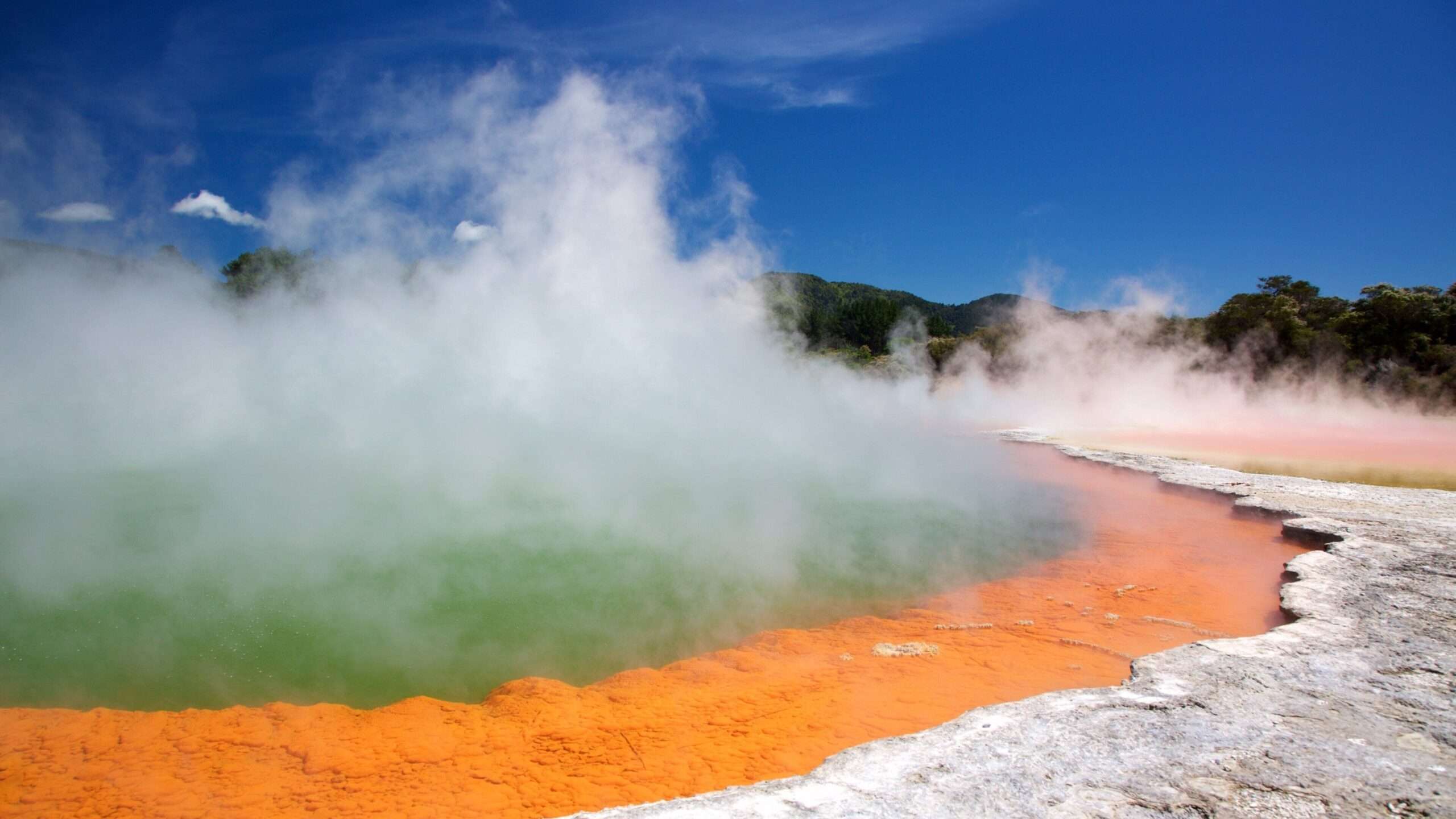
- Wai-O-Tapu, twenty minutes south, is the color option: the Champagne Pool’s orange-rimmed steam, the Devil’s Bath’s improbable green, and the Lady Knox geyser induced daily at 10:15 with a surfactant dose — the soap-assisted routine the alarm already filed under part-of-the-show; details at waiotapu.co.nz.
- Whakarewarewa — the living Māori village beside Te Puia’s steam field — runs its own guided visits: residents cooking in thermal vents and bathing in shared pools, the geothermal city as a functioning home rather than a park.
- The free layer is everywhere: Kuirau Park’s boiling mud and steaming vents at city-park terms, lakefront sulphur flats, and the town’s storm drains exhaling — Rotorua’s ground does the exhibition whether ticketed or not.
- The Redwoods’ treewalk and forest trails add the green counterweight, the Polynesian Spa runs lakeside mineral baths for the recovery hour, and the cultural concert-and-hāngi evenings per the alarm belong to overnighters — the good ones start when the day-trip clock says leave.

Getting there
The alarm’s seven o’clock rule is structural: three hours down, five on the ground, three back lands you home by dark with one park, the free layer, and lunch inside the frame. Coach tours run the identical arithmetic with commentary; self-driving adds the Wai-O-Tapu option cleanly (it sits south of town on the return-trip side for nobody — plan the loop deliberately). The overnight conversion per the alarm is the true upgrade: it buys the cultural evening, the second park, and a dawn when the whole caldera steams like a kettle.
The day
Wai-O-Tapu version: arrive for the 10:15 Lady Knox induction — the ranger’s explanation of the soap, the column obliging on cue, and the crowd’s cheerful complicity — then the main circuit’s hour and a half: the Champagne Pool’s rim at full color, the mud pools, the Devil’s Bath photographed in disbelief. Te Puia version: time the visit loosely around Pōhutu’s own schedule (it plays generously most days), take the carving school’s working floor seriously, and let the guided layer carry the Māori context the park was founded to keep. Either version lunches in town, walks Kuirau’s free mud, and spends the remainder on the Redwoods’ canopy walk or the Polynesian Spa’s lakeside pools before the highway claims its three hours back. The sulphur, per the alarm, has long since stopped registering.
When to go
The geothermal field ignores seasons — winter’s cold air doubles every steam plume for photographers, summer adds lake swimming and the longest driving light. School holidays fill the parks with families; the 10:15 Lady Knox moment queues accordingly year-round. Rain flatters the mud pools and empties the boardwalks — a wet Rotorua day outperforms most cities’ sunny ones. The overnight clause per the alarm is the one calendar-independent truth: the evenings here are the half the day trip structurally cannot have.
Frequently Asked Questions
Te Puia or Wai-O-Tapu, really?
Culture-plus-geyser versus pure geology: Te Puia’s Pōhutu is the real unsoaped thing with the carving schools attached at the higher price; Wai-O-Tapu’s colors are the photographs you came for with the 10:15 ritual as theater. First visits split roughly by whether the Māori dimension or the Champagne Pool ranks higher — the alarm’s pick-one discipline holds either way.
Why do they soap Lady Knox?
A surfactant dose breaks the surface tension between the geyser’s water layers, triggering the eruption on schedule — a trick discovered by prison-camp launderers a century ago and institutionalized since. The park explains it openly before each firing, which is what the alarm filed as part of the show.
Is the smell actually bad?
Hydrogen sulphide runs the town’s signature — rotten-egg on arrival, background within the hour, per the alarm’s promise. Sensitive noses notice it longest at the free mud parks; nobody has ever cut a trip short over it.
Can I swim in anything thermal?
At the commercial baths, yes — the Polynesian Spa’s lakeside pools are the standard — and at a couple of maintained free spots locals will name. Never in unmarked pools or streams: temperatures and chemistry change without warning, and the warnings are not decorative.
Rotorua or Hobbiton with one long day?
Hobbiton (documented on this network) is the set-piece tour at two hours’ reach; Rotorua is the living-planet day at three. Film pilgrims south-west, geology-and-culture south-east — and the truly ambitious note both share Highway 1’s first stretch, which is how the twelve-hour double-headers get invented. The alarm recommends against inventing one.